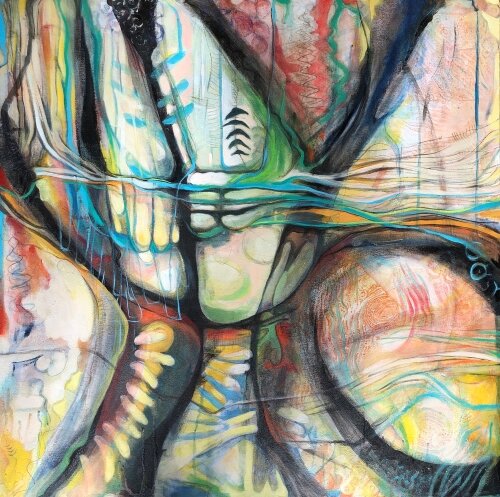
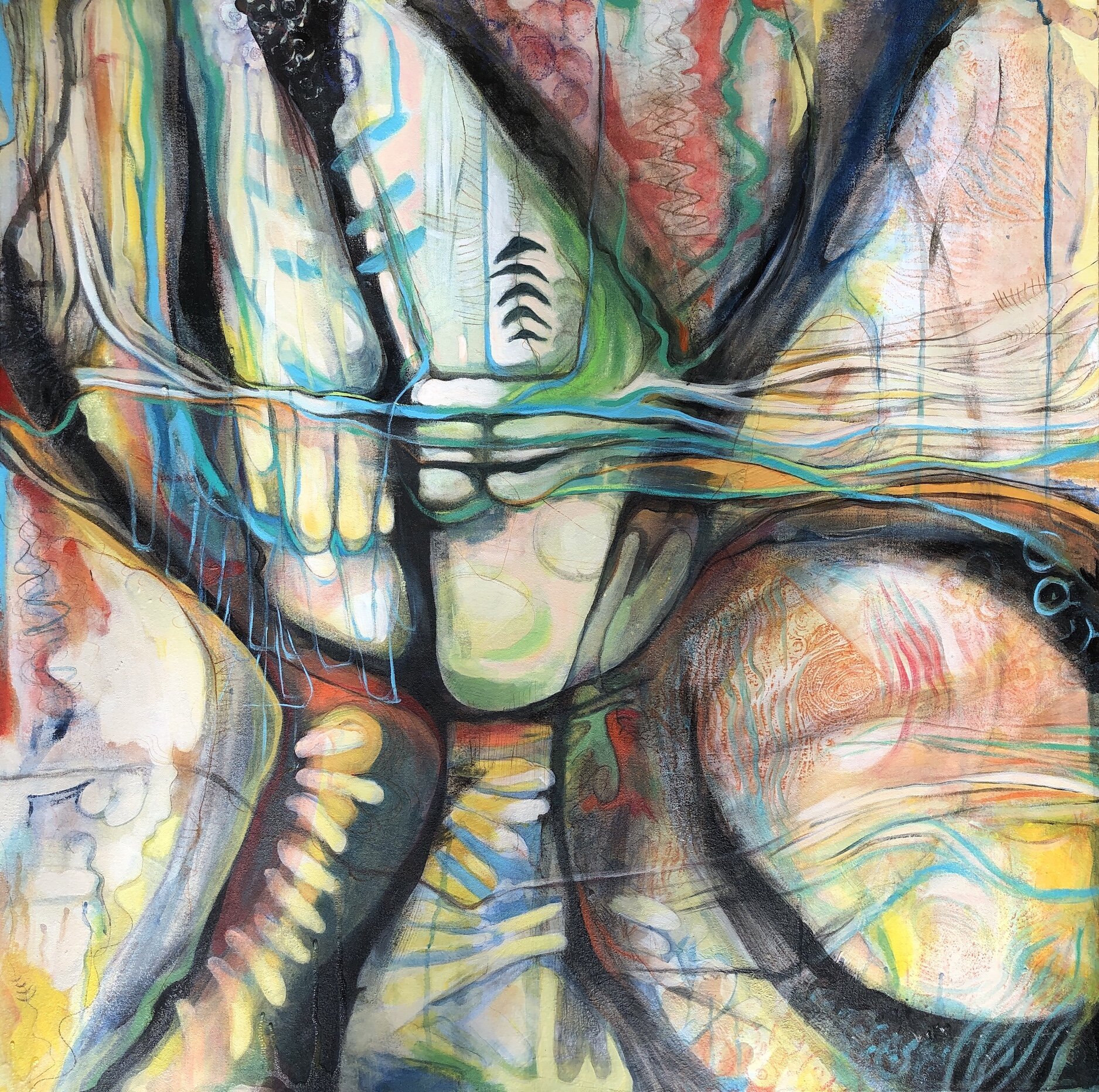
Welcome to the third issue of Galdrar, where writers and artists create pieces based on a musical stimulus. For Issue #3, we will be examining Leopold Godowsky’s Indonesian-inspired piece titled Java Suite, No. 1: Gamelan through the works of Joan Johnson, Walter Weinschenk, and Michelle Spiziri.
About the Composer
Leopold Godowsky was a Polish pianist and composer born on February 13, 1870, in Žasliai, Lithuania. His parents, who were of Jewish descent, were from Merkinė. When Godowsky was just 18 months old, his father Mordkhel died from cholera. He was raised by his mother, Khana-Sheyna, and a foster couple, Louis and Minna Passinock, in Vilnius.
By age five, Godowsky was playing piano and violin, as well as composing music. His first concert was at age nine. Most admirably, Godowsky was almost entirely self-taught, receiving few lessons before the age of 13. He briefly studied under Ernst Rudorff before traveling to the United States, where he gave his first American concert in Boston. Godowsky then traveled back to Europe and eventually studied under famed French composer Camille Saint-Saëns. By 1890, he had returned to the United States and became an instructor at the New York College of Music.
In 1891, Godowsky married Frieda Saxe, who was a childhood friend. After their marriage, he served as an instructor at the Gilbert Raynolds Combs’s Broad Street Conservatory in Philadelphia before settling in Chicago, where he taught at the Chicago Conservatory. After a very successful concert in Berlin in 1909, he took over Ferruccio Busoni’s classes at the Vienna Academy of Music, before eventually returning to the United States at the outbreak of World War I.
The end of Godowsky’s life was fraught with heartbreak and illness. In 1928, Godowsky disowned one of his sons, Gordon, after he abandoned schooling and married a Vaudeville dancer. He also suffered tremendous financial losses during the Great Depression. While recording Chopin’s Scherzo in E Major in 1930, Godowsky had a massive stroke, leaving him partially paralyzed. In November 1938, Godowsky committed suicide, leaving behind Frieda, who died a year later from a heart attack.
The Stimulus
Godowsky completed the Java Suite in 1925 after visiting the island of Java in Indonesia. Consisting of twelve movements, this work emulates the musical traditions of the Javanese people, incorporating sounds that imitate instruments like the gamelan, xylophone, kemanak, and gangsa. Godowsky prefaced the work with the following:
“Having traveled extensively in many lands, some near and familiar, others remote and strange, it occurred to me that a musical portrayal of some of the interesting things I had been privileged to see, a tonal description of the impressions and emotions they had awakened, would interest those who are attracted by adventure and picturesqueness and inspired by their poetic reactions.
Who is not at heart a globe-trotter? Are we not all fascinated by distant countries and strange people? And so the thought gradually matured in me to recreate my roaming experiences. This cycle of musical travelogues-tonal journeys – which I have name collectively “Phonoramas,” begins with a series of twelve descriptive scenes in Java.”
Interlude by Joan Johnson
Love we are lost
In an opening of our lives
Listening to music
Deep in percussion and riffs
Lost in a map musicians make
In a journey to unknowing
Like amoebae in a puddle
We are gone through the swollen hatches
Lost to all married voices in our world
Lost to the keepers of keys and notebooks
Deep in the belly of sound
Like bears in winter
Or lost at sea in chasms of clear light
An evening in an unfamiliar town
We are shadows dancing naked
Ecstasy too tame a word
For the implosion of all lost things
The Jackals by Walter Weinschenk
I staggered through the elephant grass. I felt myself grow weak and I leaned against an acacia tree. I dropped my gun but it didn’t matter at that point, it was of no use to me. The long grass swayed and curled over it and my gun disappeared as if tossed to the sea. I knew that I would never leave that jungle and the ground seemed to pull me into its own hot grip. I was bleeding badly: I had been mauled by a badger. My leg had been ripped open and the blood ran out of me as if liberated and it flowed with unrelenting force. All I could do was watch myself bleed.
News of my predicament traveled quickly: the howler monkeys leaped for joy and yelled from distant treetops. Ruby-eyed birds screamed, fluttered and flew from their nests in celebration. Green flies with large-veined wings circled above my body, waiting, waiting . . . they all waited for the moment of my dying and they knew and I knew that my time was soon to come. I dug through the brown ground with my fingers and I felt the staccato rhythm of heavy footsteps: the jackals were coming. They knew where to find me and they were speeding in my direction. They readied themselves to war over my carcass and, in all probability, I would be dead by the time they arrived. As my thoughts raced, the clouds grew black and it was then that the rains commenced and the water poured down and pummeled my body. I thought that I might drown before I bled out. The rain descended in steady flow and the jungle seemed to draw it from the sky as if it were itself a thirsting animal. I felt the rapid depletion of my strength but then, in that moment, something within me seemed to turn a curious corner. The swirling air echoed with sound and I thought I heard the peal of bells. I felt my fear dissipate and it proceeded to drain with the rain into the ground.
The long branches of the acacia tree hovered over me and shielded me like an array of arms while their matte green leaves bounced in the air, lifted by the breeze and laden by the weight of water. I heard thunder of a sort that I had never heard before: it was a strange arrangement of carillons and crashes, a variety of tone and chordal language steadied by determined rhythm. The thunder grew loud in the air and rang in my ears. It was a natural melody repeated, altered and rearranged in wonderful ways and it was all premised upon a strange series of notes that seemed to skip across the steps of some odd scale. The sky rang out and the song of it resonated in a series of long, distilled tones that held firm in the air and flowed through me. The sound was pleasant, peaceful and alternated in strength and volume. There were questions and statements and answers in that music and I absorbed all of it as my blood continued to run. There came a moment, however, during which the sound grew discordant and I felt a bit unsettled: the music of that thunder seemed to rattle against itself until new phrases rose out of the old and the old were released. Sound cascaded from the sky, over and again, and I could almost see the notes change pace and trade place amongst themselves and the whole of that music resounded like some symphonic dream that rose from the ground as well. The rhythm and chime reminded me of the church bells of my youth and moments long forgotten. The sound became the voice of all birds and insects and the long sway of branches and the lashing of vines that swooned and snapped at the mercy of the deluge. In that moment, I felt no pain. I looked at my leg and, in fact, my wound had disappeared. Somehow it had healed; there was no mark to be found.
The jackals arrived and approached me. They surrounded me as if I were some curiosity and, at the same time, they wandered near as if they knew me. They lowered their heads and panted in unison. We lay upon the wet grass beside each other. I felt as if I were one of them and, in fact, I was one with them. We shared the ground and the rain stopped as suddenly as it had started. We listened as the sky rang with sound from beyond the trees. At that moment, those jackals and I were of one kind, we were the same. We had no hunger, we had no desire, we wanted nothing. We were at peace, we stared at the ground, we stared at the sky, we merged in the mist, we breathed and absorbed the sound.
Symphony of Sound & Vibration by Michelle Spiziri