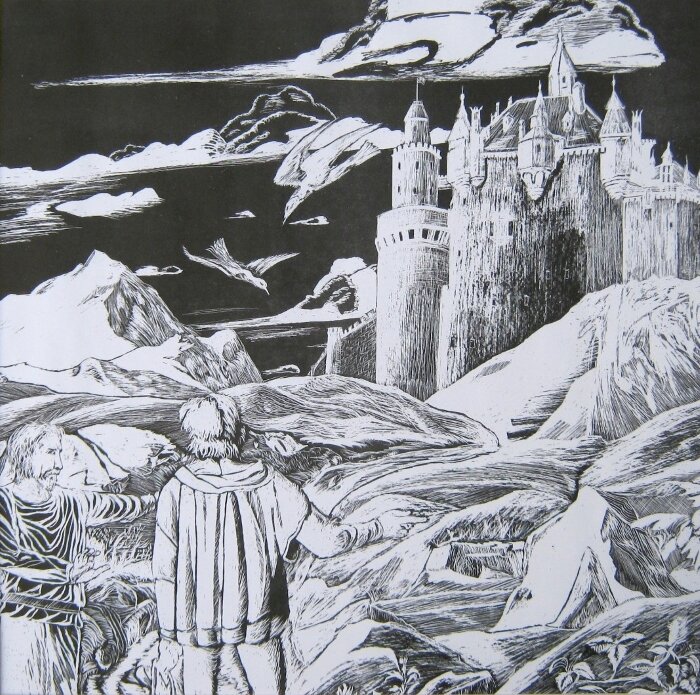
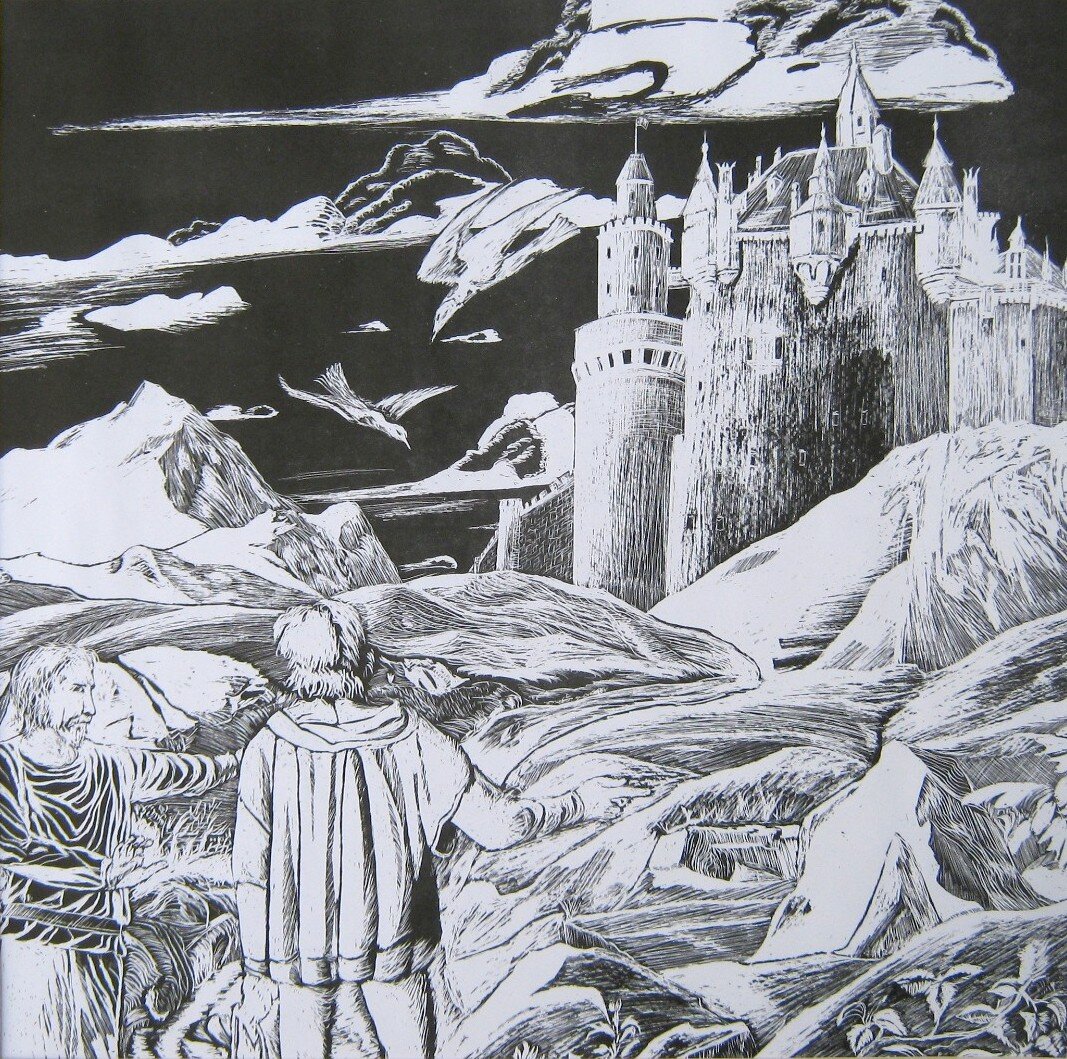
Welcome to the first issue of Galdrar, where writers and artists create pieces based on a musical stimulus. For Issue #1, we will be exploring Sergei Rachmaninoff’s Etude-Tableaux Op. 33, No. 4 in D Minor through the works of Kurtis Ebeling and Tony Murray.
About the Composer
Sergei Vasilyevich Rachmaninoff was a Russian composer and pianist born in 1873. He took up piano at the age of four and graduated from the Moscow Conservatory in 1892. Following the negative criticism of his debut symphony in 1897, Rachmaninoff quit composing for four years. However, after successful therapy, he returned to music and composed his second piano concerto in 1901, which was enthusiastically received by critics and audiences alike. While Rachmaninoff spent most of the next sixteen years in Dresden, Germany, he eventually moved to New York City. For the last 25 years of his life, Rachmaninoff gave several piano and conducting performances around the United States. He eventually passed away from melanoma in 1943, just one month after receiving U.S. citizenship.
The Stimulus
Written in 1911, Rachmaninoff’s etudes were intended to be picture pieces for pianists developing tonal mastery. However, he famously refused to tell students or fellow colleagues the inspiration behind each etude, stating the following: “I do not believe in the artist that discloses too much of his images. Let [the listener] paint for themselves what it most suggests.” In this issue, we chose a poem and a scratchboard engraving with contrasting interpretations of the piece. Each presents a unique narrative with clear imagery and thematic depth.
Light and Sound in D Minor by Kurtis Ebeling
Sound, like light, dances as circus performers,
in colorful trances, when pushed into corners,
and moves all around an indefinite room
whose length is time and will become a tomb,
held at a distance by the mind’s attention
to a fleeting instance of quiet suspension—
between now and the next struck piano string
that sings without words, but contains blurred meaning.
The room, suddenly, is emptied except for the echoes
of strings sustaining sweetly, and softening flicking yellows;
it expands to the size of a canyon under rustling meadows,
and makes silence a companion, which gives time its billows.
Time is an unevenly expanding balloon,
a piano string waiting to bloom,
that pops with the swing of an arching hammer—
the room recedes; the dancers stammer.
The Warning by Tony Murray